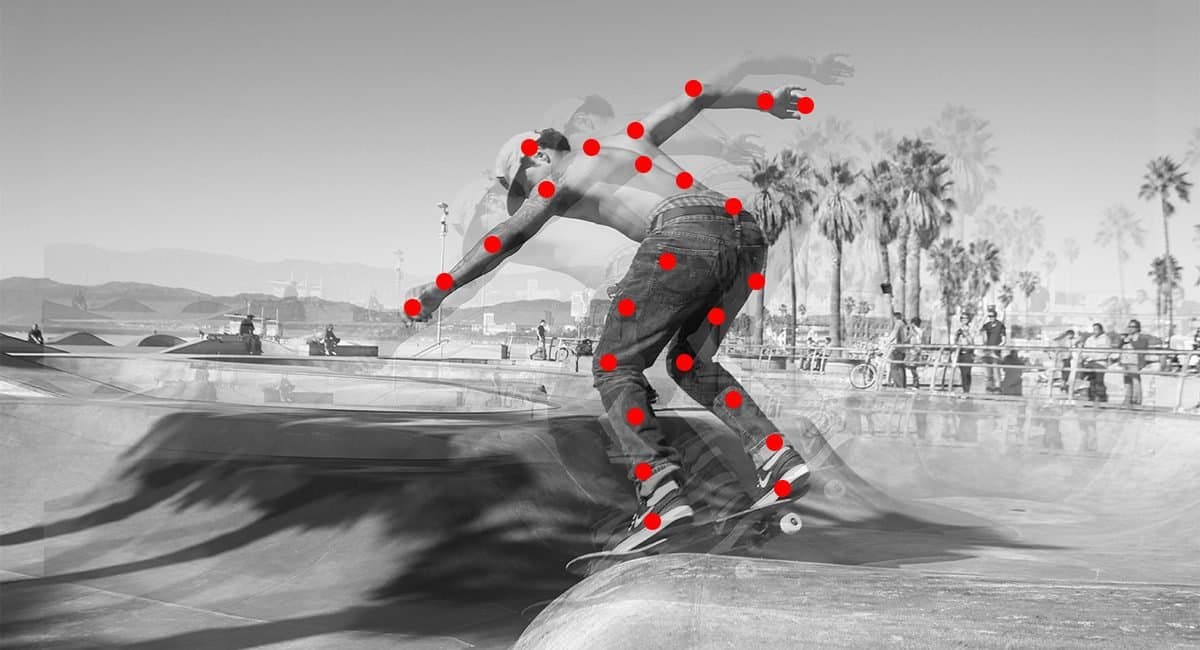
The computer vision sector is advancing significantly. Multimodal models (VLMs) and Large Language Models (LLMs) now accomplish tasks that previously required hundreds of hours. While automated description and classification have accelerated and become more economical, human image annotation remains essential in AI development.
High-Quality Training Data: Why Models Rely on Human Image Annotation
Model performance correlates directly with labeling quality. Developers built every impressive VLM using extensive, precisely-labeled datasets. Humans establish what constitutes accurate image interpretation and meaningful labeling.
Without human involvement, models lack reference points. Automation requires foundational manual work. Quality data demand is surging — "the global data annotation market will reach over $14.26 billion by 2034 growing at a CAGR of nearly 27%." This expansion demonstrates that increased model complexity demands more precise ground truth data, not less.
VLM Hallucinations: Why We Need Humans for Edge Cases
VLMs perform well on straightforward tasks like object detection but struggle with cultural contexts and emotional subtleties. Ambiguous situations trigger model guessing, which proves costly in professional settings.
Poor data quality carries substantial consequences. Research indicates "poor data quality costs organizations an average of $12.9 million per year." In healthcare and autonomous driving sectors, model errors create safety hazards.
Consider a warehouse photo where a VLM identifies merely a "person standing," while human annotators notice the missing hard hat. This distinction separates generic descriptions from genuine business value.
RLHF and Validation: The Role of Quality Assurance
Automatically-generated labels still require validation. Quality assessment, error detection, and hallucination identification demand human review. Uncontrolled automatic annotation resembles operating autonomous vehicles without safety oversight — functional until unexpected circumstances arise.
Human-in-the-Loop (HITL) approaches yield superior results. Research suggests "human review improves AI accuracy by 15–20% and significantly reduces false positives." For BoBox clients, this separates prototypes from production-ready systems.
New Tools Transform Human Image Annotation
VLMs have altered annotation work fundamentally. Teams now invest less effort in basic labeling, focusing instead on improving automatic labels, designing guidelines, and addressing edge cases and specialized datasets. This progression moves toward Reinforcement Learning from Human Feedback (RLHF), creating demand for professionals who understand both data and model mechanics.
Humans and AI: A Powerful Collaboration
The paradigm isn't "human versus AI" but rather "human plus AI." AI manages bulk processing while humans handle complex cases. This partnership accelerates workflows and improves accuracy simultaneously.
Conclusion
VLM advancement hasn't eliminated the necessity of human annotation — it has intensified it. Humans provide data meaning and establish quality standards.
Automation accelerates processing; human expertise ensures safety and precision. Don't allow data hallucinations to undermine computer vision projects.
Data annotation specialists at BoBox document real-world anomalies accurately. We implement rigorous Quality Assurance to maintain annotation accuracy and optimize pipelines through appropriate tool selection. Our expertise converts raw data into superior ground truth — not just annotation alone, but the entire pipeline required for production-ready CV systems.