TL;DR — A training dataset is the set of labeled examples a model learns from, and the model can never be better than what that data represents. If your data doesn't reflect production conditions, your model won't work in production — no matter which architecture you pick.
Most teams start AI development with publicly available datasets from academic institutions. That's a sensible first step: public data gives you a quick baseline and a way to measure progress.
But in many real-world use cases, public data turns out to be insufficient for a reliable, trustworthy solution — especially when the system must work in a specific environment or under conditions that generic datasets don't cover. We've seen exactly this in our Safety1st facemask detection case study: a model that performed well in the lab produced so many false positives in a glass-walled showroom that the device was unusable, until it was retrained on data from the real site.
What makes a training dataset "good"?
A good dataset is not the biggest one — it's the one that matches reality. Three properties matter most:
Representation — The training data must reflect the actual distribution of inputs the model will see in production. If the model runs in a specific facility, under specific lighting, with specific cameras, the training data should come from that reality.
Bias control — Identify demographic, geographic and environmental biases before they get encoded into the model. Biased data produces biased models, and those biases are hard to remove after training.
Operating condition coverage — Cover the full range of conditions: times of day, seasons, equipment wear, partial occlusions and rare but plausible scenarios. Each condition the data misses is a likely failure mode later. (We go deeper on this in The Importance of Details in Data Annotation.)
How do you build your first production dataset?
- Define the model's purpose — what decision will the model support, and which errors are acceptable? This sets the classes and the quality threshold.
- Audit the data you already have — check coverage against real operating conditions and note the gaps.
- Collect from the deployment environment — same cameras, angles and lighting as production wherever possible.
- Write annotation guidelines and a taxonomy before labeling — including rules for edge cases, occlusions and ambiguous objects.
- Label a sample first, then measure — train on the sample, review errors, and update the guidelines before scaling up.
- Add QA you can trust — review passes and inter-annotator agreement catch inconsistent labels before they reach training.
Why do so many AI projects underestimate data preparation?
Data preparation — and annotation in particular — takes significant time, and most companies and startups aren't prepared for it. The underestimation has a cascading effect:
- Rushed annotation produces inconsistent labels
- Inconsistent labels train models that behave unpredictably
- Unpredictable models need expensive debugging and retraining
- Retraining needs — more annotation
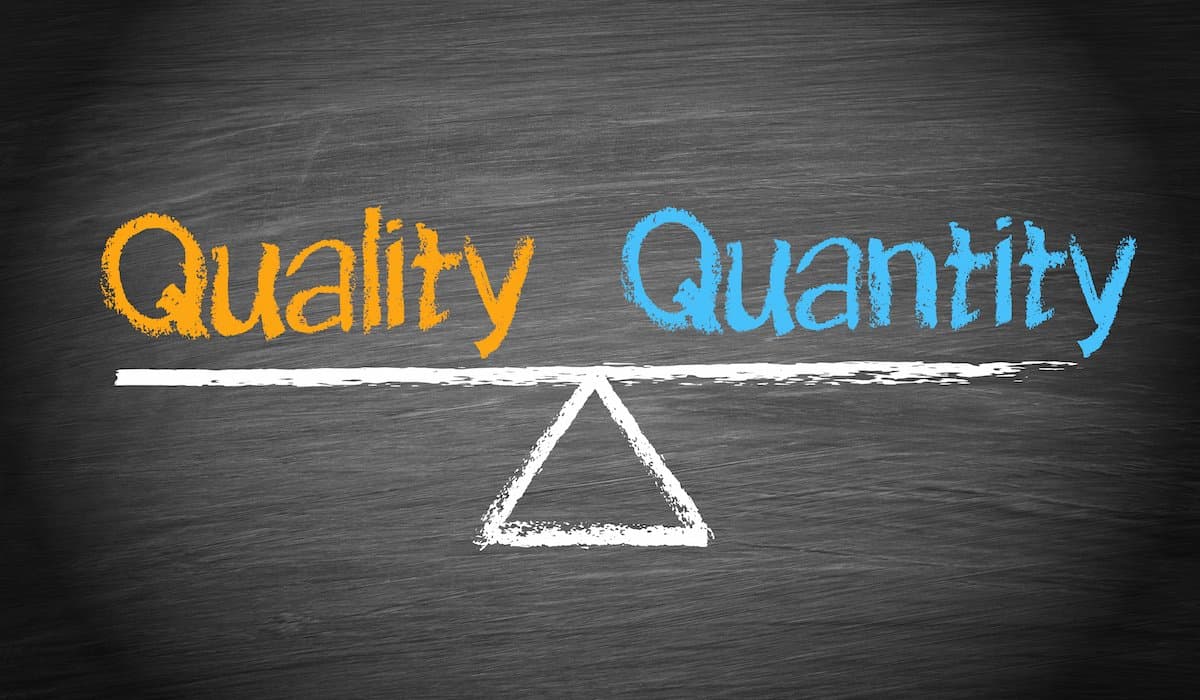
Getting the data right the first time costs far less than repeating that cycle. This is the same trade-off we describe in Data Quantity vs Data Quality.
Is this still true in the era of foundation models?
Yes. Large pre-trained and vision-language models reduce the amount of data needed to get started, but they still need high-quality, task-specific ground truth to be fine-tuned and evaluated for a particular environment. We cover this in Human Image Annotation in the Era of VLM.
When does outsourcing annotation make sense?
Outsourcing annotation to a specialised partner lets you:
- Access trained annotators and domain expertise for complex scenarios
- Scale labeling capacity without building an internal team
- Keep your ML engineers focused on model architecture and engineering
- Use an established QA process instead of building one from scratch
At BoBox, projects are run by senior annotators and a taxonomy lead, with two QA passes included. We've delivered 135,000+ bounding boxes and 954+ hours of data validation, and we start every engagement with a paid pilot on a sample of your own data. See our starting prices and how a pilot works, or browse annotation by industry.
The core insight hasn't changed since we first wrote this article: model quality is determined by training data quality, and training data quality is determined by annotation quality. Get the foundation right, and the choice of architecture becomes a much smaller problem.
Frequently asked questions
Why does training data quality matter more than the model architecture?
A model can only learn the patterns present in its training data. If the data doesn't cover the lighting, angles, objects and edge cases of production, even a state-of-the-art architecture will fail there. Fixing the data usually improves results more than switching models.
Are public datasets enough to train a production computer vision model?
They are a good starting point and baseline, but rarely enough on their own. Public datasets are collected in other environments, so they miss the specific conditions your model will face. Most production models need data from their own deployment environment.
How large should a training dataset be?
There is no universal number. Size depends on the number of classes, how much they vary and how rare the edge cases are. Coverage of real conditions matters more than raw volume — a smaller dataset that represents production beats a larger one that doesn't.
Can data augmentation replace collecting more real data?
No. Rotation, flipping or colour shifts add variation to scenes the model has already seen, but cannot add genuinely new scenarios such as a different site, occlusion type or lighting condition.
When should a team outsource data annotation?
When annotation would pull ML engineers away from model work, when the domain needs trained annotators and a written taxonomy, or when volume and deadlines exceed what an internal team can label consistently. A paid pilot on a sample is the safest way to test a partner.