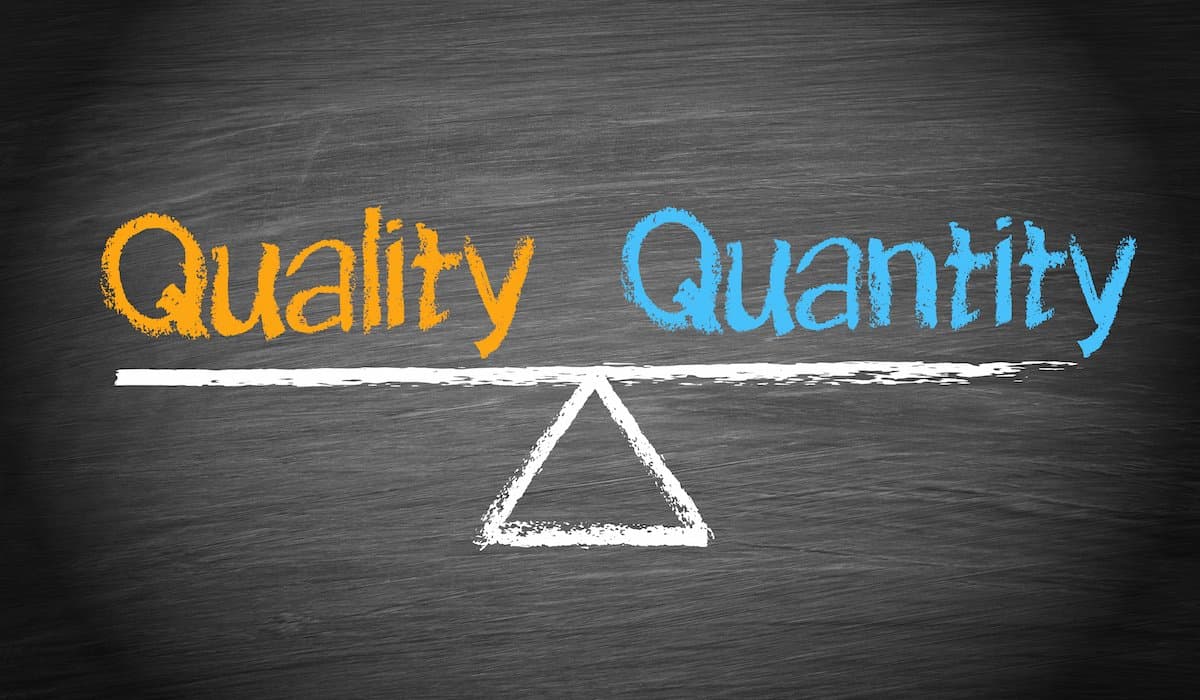
Data quantity refers to the amount of data available for analysis, while data quality refers to its accuracy, completeness, and relevance. A smaller dataset with high data quality can provide more meaningful insights than a larger dataset with lower quality — particularly in computer vision where annotation precision directly determines model behavior.
Object detection algorithm performance depends on both the amount of annotated data and the annotation quality. Effective models require diverse, representative samples for real-world generalization.
Data Preparation and Annotation
Dataset preparation is the most resource-intensive phase of model development. The process involves:
- Image acquisition from deployment-representative sources (CCTV cameras, production lines, etc.)
- Filtering based on technical requirements (resolution, coverage, diversity)
- Annotation with appropriate labels and consistent guidelines
Camera angles, lighting conditions, and preprocessing tasks like video frame extraction all affect the representativeness of the final dataset.
Annotation guidelines create a fundamental tradeoff: detailed specifications prevent inconsistency but reduce annotation speed, while simplified guidelines enable faster annotation at the cost of accuracy.
Common annotation errors that degrade model performance:
- Missing object bounding boxes (false negatives)
- Redundant or incorrect bounding boxes (false positives)
- Inaccurate box size or positioning
- Misclassified labels
- Wrong attribute assignments
Models Trained on Noisy Datasets
Training models on corrupted or inconsistently annotated data causes:
- Diminished prediction accuracy on real-world data
- Overfitting tendencies (memorizing noise patterns)
- Unreliable detection outputs with poor confidence calibration
- Higher computational requirements for equivalent performance
While additional data may offset random annotation errors, systematic biases from human annotators transfer directly to model behavior. A model trained on consistently wrong labels learns to replicate those errors at scale.
Avoiding Annotation Noise
Since annotation remains a human activity, perfection isn't achievable — but quality can be systematically managed.
The solution involves:
- Supervised labeling processes with specialist oversight
- Iterative review cycles with annotator feedback
- Parameter testing before investing in large-scale annotation
- Inter-annotator agreement measurement as a quality metric
Teams lacking capacity to manage comprehensive annotation workflows independently benefit from partnering with specialized annotation companies that have established quality processes.
The data quality vs. quantity debate often resolves itself: with the right quality processes in place, teams can collect enough data at sufficient quality rather than choosing between the two.