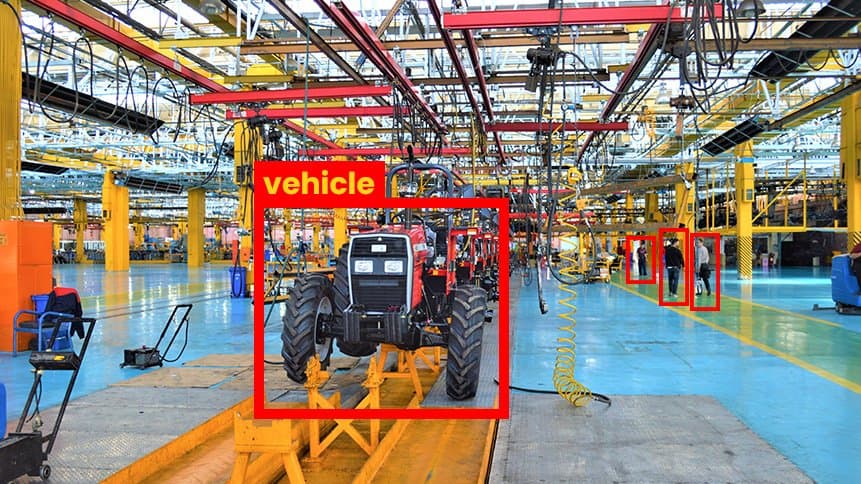
Computer vision is a set of image processing techniques designed to understand the content of an image. When combined with modern computing power, it automates industrial processes that previously required human observation at every step.
See also: Part 2 — People Analytics and Heatmaps
Production Supervising and Management
Computer vision enables real-time monitoring of production lines:
- Industrial robot control — computer vision guides robotic arms with sub-millimeter precision for assembly, welding, and placement tasks
- Precision operation support — rotary cutting, laser cutting, and other precision processes benefit from visual feedback loops
- Multi-station supervision — single systems monitor multiple production stations simultaneously, flagging anomalies for human review
Quality Control
Automated defect detection on production lines represents one of the highest-ROI applications of industrial computer vision:
- Camera-based real-time monitoring with trained defect detection algorithms
- 24/7 operation capability without fatigue or attention lapses
- Consistent application of quality standards across all products
- Integration with production control systems for automatic line stops or rejection routing
Control of Safety Policies in Risk Areas
Workplace safety monitoring protects employees in hazardous environments:
- Real-time detection of safety policy violations (missing PPE, unauthorized zone entry)
- Immediate alerts to supervisors and workers
- Personal protective equipment (PPE) detection — hard hats, safety vests, goggles, gloves
- Restricted area monitoring and access control
Computer vision safety systems operate continuously without the distraction fatigue that affects human safety monitors, providing more consistent coverage.
Inventory Management
AI-driven inventory tracking improves accuracy and reduces labor requirements:
- Automated item identification without barcode scanning requirements
- Real-time inventory tracking across warehouse locations
- Drone integration for high-bay warehouse stock counting
- Automatic low-stock alerts and reorder triggering
The breadth of industrial applications demonstrates why computer vision has become a foundational technology for modern manufacturing and logistics operations. In each case, the quality of the underlying model depends on the quality of the training data — making annotation a critical investment in any industrial CV initiative.