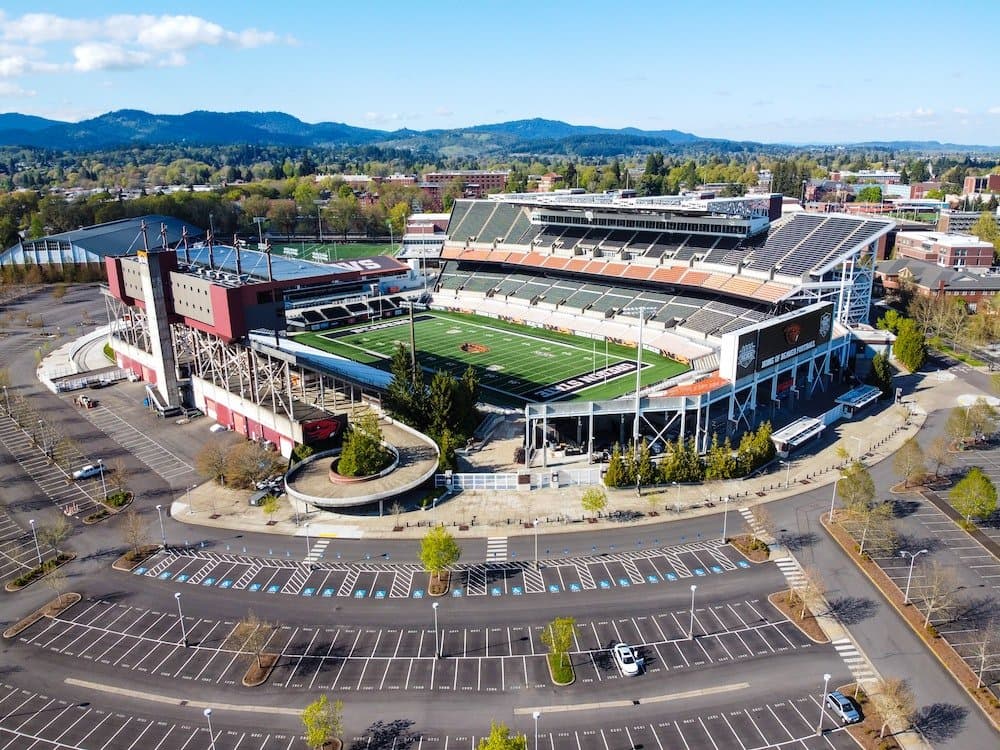
Sports arenas, stadiums, concert halls, theaters, and conference venues face a significant challenge: at-home viewing increasingly surpasses live experiences in several practical dimensions:
- Affordable — premium seating available at minimal streaming cost
- Time-saving — no travel, traffic, parking, or queue delays
- Comfortable — pause options, on-demand facilities, undisturbed viewing
- Accessible — better suited for elderly and mobility-impaired attendees
- Secure — no aggressive behavior or panic risks
Live events retain competitive advantages through uniqueness, all-sense stimulation, and emotional connection. However, venues must adapt operations through technology and automation to address labor costs and deliver experiences that justify live attendance.
Technology Solutions for Venue Operations
Facilitating On-Boarding
- Computer vision parking systems — monitoring space occupancy in real-time, directing arriving visitors to available spaces and reducing entry congestion
- Queue management — real-time visitor flow optimization at gates, reducing wait times and improving the first impression of the venue experience
Interior Traffic Control
- Flow optimization with waiting time predictions for food, beverage, and restroom queues
- Sanitary regulation detection and automated enforcement during health events
Security Surveillance
Computer vision transforms venue security by:
- Crowd monitoring — detecting unusual densities or movement patterns that indicate potential safety issues
- Prohibited item identification — detecting weapons or prohibited items in real-time
- Facial recognition for access control at premium areas
- Hazard detection — identifying spills, structural hazards, and other safety risks
Visual Enhancement
- Detail visibility optimization across venue sections through intelligent camera management
- Augmented camera feeds with analytics, tracking, and enhanced replays for broadcast and in-venue screens
Implementing Computer Vision in Venues
Smart computer vision algorithms require careful implementation planning:
Scope definition — What objects to detect, environmental conditions (variable lighting from day/night events), edge cases specific to your venue type.
ML specialist involvement — Early design phase consultation ensures technical requirements align with business objectives.
Dataset preparation — As the AI algorithm is only as good as the dataset it is fed with, dataset decisions significantly impact solution quality.
Case Example: Parking Lot Occupancy Monitoring
A venue parking implementation follows this process:
- Project scope setup — define vehicle types, tracking requirements, camera specifications, and classification definitions
- Dataset collection — representative samples across time of day, weather, and occupancy levels
- Initial annotation with issue collection and edge case documentation
- Iterative improvements — each annotation cycle reveals model failures to address
The annotation cycle is not a one-time activity — it's an ongoing process of improvement as the model encounters real-world edge cases it wasn't prepared for.