By leveraging computer vision technologies in crop planning, farmers can make data-driven decisions, optimize resource usage, and enhance sustainability. This is the first of a two-part series on computer vision in agriculture — covering crop management applications.
See also: Part 2 — Computer Vision in Livestock Farming
Production Planning
Computer vision analyzes satellite imagery and terrain data to evaluate land suitability for crops by examining:
- Soil quality indicators visible from multispectral imagery
- Topography and drainage patterns
- Sunlight exposure and shadow patterns across the growing season
The technology optimizes seed distribution and planting depths, while assessing crop water stress through vegetation indices to improve irrigation efficiency and reduce water consumption.
Monitoring and Health Control
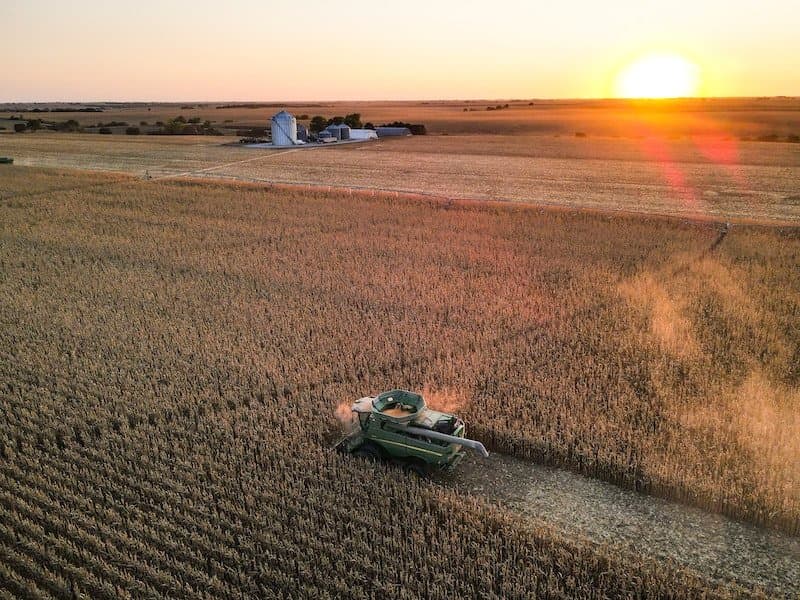
Drones equipped with cameras capture extensive data for continuous crop monitoring throughout the growing season.
Key capabilities include:
Quality assessment — Object detection models assess harvest quality by analyzing color, size, ripeness, and defect detection across entire fields rather than sample-based inspection.
Disease and pest detection — Early identification of fungal infections, pest infestations, and nutrient deficiencies enables targeted interventions rather than blanket pesticide application.
Yield estimation — Crop counting algorithms support logistics planning by predicting harvest volumes weeks in advance.
Automated plant phenotyping — Computer vision replaces manual botanical assessment for breeding programs, measuring growth parameters across thousands of plants continuously.
Harvesting Planning and Automation
Computer vision estimates optimal harvest timing by analyzing color, size, and texture changes that indicate ripeness — replacing the need for constant manual field inspection.
Specialized harvesting robots use object recognition to:
- Autonomously identify and pick ripe fruits and vegetables
- Navigate between rows without damaging crops
- Adapt grip force based on detected fruit size and firmness
Systems guide labor and resource deployment based on crop maturity maps generated from aerial imagery.
Data Annotation Best Practices for Agricultural CV
Building effective crop monitoring models requires representative datasets:
- Define annotation types — crops, weeds, pests, disease symptoms, irrigation equipment
- Gather diverse images — across growing seasons, weather conditions, growth stages, and camera angles
- Use appropriate methods — bounding boxes for simple objects; segmentation masks for complex shapes like irregular disease patches
- Assign class labels — distinguishing crop varieties, disease types, and pest species requires agricultural domain knowledge
Professional annotation teams with agricultural domain expertise significantly improve the quality of datasets for precision farming applications.